Home
Preventing Torture
Edited by
NPM OBS
(The Independent Observatory
of National Preventive Mechanisms Against Torture)
“Preventing Torture” is a platform for critical, constructive observation of the work on torture prevention worldwide.
The aim is to give additional impetus to torture prevention. The purpose is to improve it.
“Preventing Torture” is for debate and ideas, not merely an information outlet.
The site features both documents produced by NPM OBS and external contributions. As a rule, anybody can contribute.
“Preventing Torture” also offers a Who’s Who section, where the biographies of subscribers can be found.
NPMs can post all their annual or thematic reports and other relevant documents in the section NPM Reports.
For the lay-out of this site, we aim at conciseness and sobriety.
To cover the costs of NPM OBS for setting up, maintaining and nurturing this site, access to “Preventing Torture” is subject to an annual subscription fee on a pay-what-you-can basis.
Publications
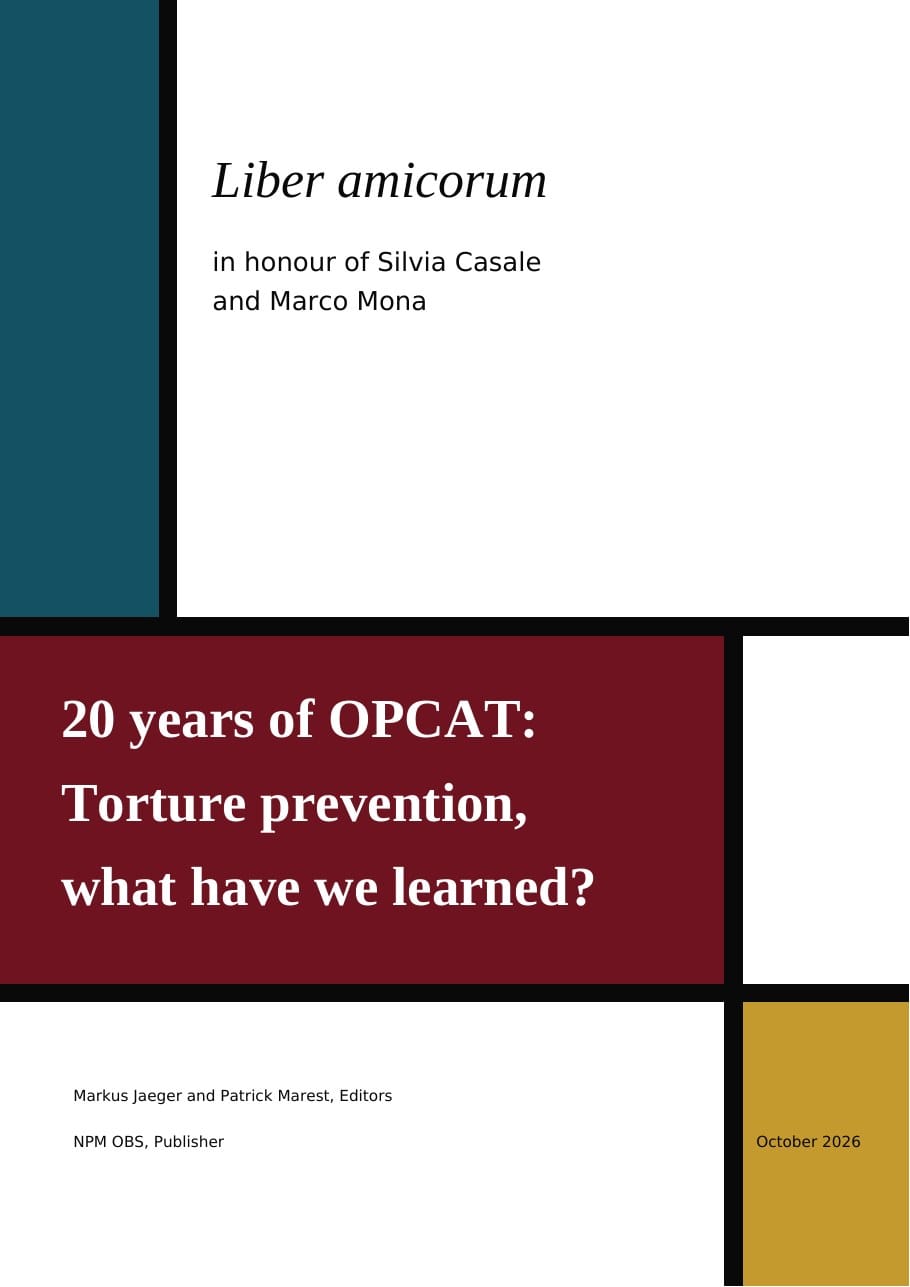
Twenty years after the OPCAT entered into force, what has changed in the prevention of torture and other ill-treatment? What remains to be achieved?
This Liber amicorum brings together forty-one contributors in honour of Silvia Casale and Marco Mona. It connects the experience of people who have helped shape preventive monitoring with a critical examination of its achievements, limitations and future.
Ten salient questions structure the volume. They explore mandates and powers, independence and effectiveness, institutional models, cooperation, training, the scope of monitoring, resources and the challenges ahead.
Analytical syntheses are followed by the contributors’ full texts, allowing readers to move between a shared assessment and the distinct voices, national experiences and perspectives on which it rests.
This book is an invitation to reflect on how independent scrutiny, dialogue and sustained follow-up can turn preventive commitments into practical protection for people deprived of their liberty.
Debates
Twenty years after the entry into force of the Optional Protocol to the Convention against Torture (OPCAT), 41 contributors to the Liber amicorum in honour of Silvia Casale and Marco Mona take stock of the prevention system. This dossier brings together their full responses to the first question, in the order in which they appear in the book. The question examines the strengths and weaknesses of the system at a time when some 80 countries have designated a national preventive mechanism (NPM). The responses shed light on the value of regular visits to places of deprivation of liberty and on how NPMs and the United Nations Subcommittee on Prevention of Torture (SPT) complement one another. They also examine what makes their work effective, including the independence of the mechanisms, the resources available to them and how the authorities follow up on their recommendations.